
If you have been treating your sinus problems for months or years and they keep coming back, you are probably frustrated. You have taken the antibiotics, used the nasal sprays, maybe even had surgery. And yet the congestion, the pressure, the headaches return. For many patients, the connection between air pollution and chronic sinusitis may be an overlooked factor contributing to these recurring symptoms.
One piece of the puzzle that rarely gets discussed is the air around you.
A study published in May 2026 in JAMA Otolaryngology, one of the world’s leading ENT journals, found that people who lived near heavy traffic or industrial areas had significantly higher rates of chronic rhinosinusitis (CRS), which is the medical term for long-term sinus disease. More importantly, the kind of pollution you are exposed to appeared to determine the kind of sinus inflammation you developed.
What the Research Found About Air Pollution and Chronic Sinusitis
Researchers at a major US medical center analyzed sinus tissue samples from 62 patients with chronic sinusitis and 30 people without it. They matched each person’s home address to detailed air pollution data going back five years.
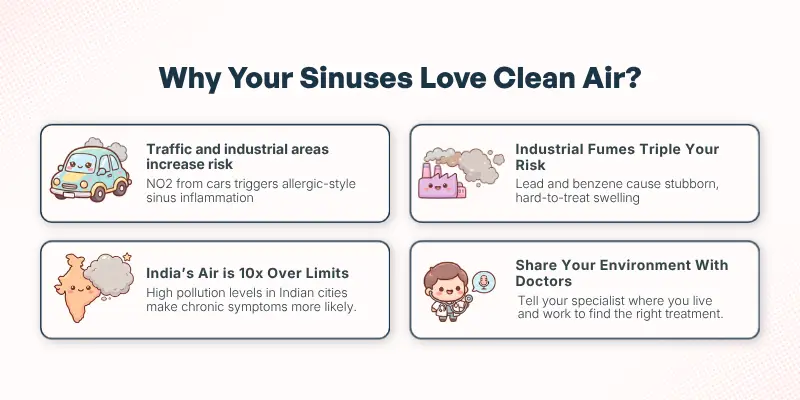
The numbers were striking. For every standard increase in nitrogen dioxide (NO2), a gas produced heavily by vehicle exhaust, the odds of having chronic sinusitis more than doubled. Exposure to lead, found in industrial emissions, was linked to nearly triple the odds. Benzene, which comes from fuel combustion and petrol fumes, also showed a significant association.
But beyond the risk numbers, the researchers found something that matters even more when it comes to treatment. Different pollutants caused different types of sinus inflammation:
- NO2 (traffic exhaust) triggered what is called Type 2 inflammation, the same allergic, eosinophilic pattern commonly seen in people with nasal polyps.
- Benzene and lead triggered a different pattern: a more innate, neutrophilic inflammation that tends to be harder to treat and less responsive to standard steroid sprays.
In other words, where you live and what you breathe may be shaping the kind of sinus disease you have.
What This Means If You Live in an Indian City
This research was conducted in California. India’s air pollution levels are, in most cities, far worse. Recent data places India’s average PM2.5 levels at nearly 10 times the WHO recommended limit. In winter 2025-26, 204 out of 238 Indian cities failed to meet even national air quality standards.
Cities like Hyderabad, Delhi, Mumbai, and Bengaluru carry some of the highest traffic-related NO2 loads in the country. Hyderabad also sits alongside significant pharmaceutical corridors, manufacturing belts, and near-constant construction activity that keeps benzene and particulate matter elevated throughout the year.
If traffic-level NO2 in California already doubles the risk of chronic sinusitis, the implications for someone living near Gachibowli, LB Nagar, or any of Hyderabad’s industrial zones are hard to ignore, especially if your symptoms keep returning despite treatment.
A word of caution: this study involved 92 participants at a single center, and the findings have not yet been replicated in Indian populations. They are directional, not definitive. But they are consistent with what sinus specialists have observed clinically for years.
What You Can Do About It
Pollution is not something you can fully control, but there are practical steps worth taking.
Track the pattern. Notice whether your congestion or headaches worsen during peak traffic hours, on particularly smoggy days, or in specific parts of the city. That pattern is useful clinical information.
Tell your doctor where you live. A thorough evaluation for recurrent or treatment-resistant sinusitis should include an environmental history, not just questions about prior medications and allergies. Mention your daily commute, proximity to industrial areas, and how long you have lived there.
Ask whether your treatment matches your inflammatory type. The neutrophilic inflammation pattern linked to benzene and lead exposure may not respond well to standard nasal steroid sprays. If your treatment keeps failing, the issue may not be the treatment itself. It may be that your underlying inflammatory pattern has not been properly identified.
The Bottom Line
Chronic sinusitis is not always just about infection or allergies. For many patients in Indian cities, pollution may be a significant and underappreciated driver of why symptoms persist.
If your sinus problems keep coming back despite treatment, getting a detailed evaluation with a sinus specialist is a good next step, one that looks beyond the sinuses themselves and considers what your environment may be contributing.
Dr. GVK Chaitanya Rao is a Sinus Super Specialist and the author of The Sinus Book, a patient guide to understanding and managing sinusitis. To book a consultation, visit sinusdoctor.com. The Sinus Book is also available on Flipkart.
FAQs
Can air pollution cause chronic sinusitis?
Air pollution can irritate the nasal passages and sinuses, leading to inflammation that may increase the risk of chronic sinusitis, especially with long-term exposure.
Which air pollutants are most associated with chronic sinusitis?
Research suggests that nitrogen dioxide (NO2), benzene, lead, and particulate matter may contribute to sinus inflammation and chronic sinusitis.
Does living near heavy traffic increase the risk of chronic sinusitis?
People living near busy roads or industrial areas may have greater exposure to pollutants that can aggravate sinus inflammation and increase the likelihood of chronic sinusitis.
Can air pollution make existing sinus symptoms worse?
Yes. Exposure to polluted air can worsen congestion, facial pressure, headaches, nasal blockage, and other chronic sinusitis symptoms.
How can I protect my sinuses from air pollution?
Monitoring air quality, limiting outdoor exposure during high-pollution periods, using air purifiers, and seeking medical advice can help reduce the impact on your sinuses.
When should I see a sinus specialist for recurring sinusitis?
If your symptoms persist for more than 12 weeks, keep returning despite treatment, or significantly affect your quality of life, consult a sinus specialist for a comprehensive evaluation.