
You wake up with a blocked nose, yet you have no cold or fever. The blockage eases after your period ends. It returns in the last months of pregnancy. This pattern often points to hormonal rhinitis, which is nasal swelling driven by changing hormone levels. In my practice, I meet many women who treat an infection that never existed. This guide explains what is happening and how to find safe relief.
Estrogen, Progesterone, and Nasal Lining Changes
Your nasal lining holds tiny blood vessels and mucus glands. Estrogen widens these blood vessels and makes the lining hold more fluid. Progesterone adds to this effect during pregnancy and in the second half of your monthly cycle.
Think of your nasal lining as a sponge. When hormone levels rise, the sponge swells and leaves less room for air. This swelling is not an infection, so antibiotics will not help. You can read more about how female hormones and sinus problems connect across a woman’s life.
Pregnancy Rhinitis: Timeline, Treatment Safety, and Recovery
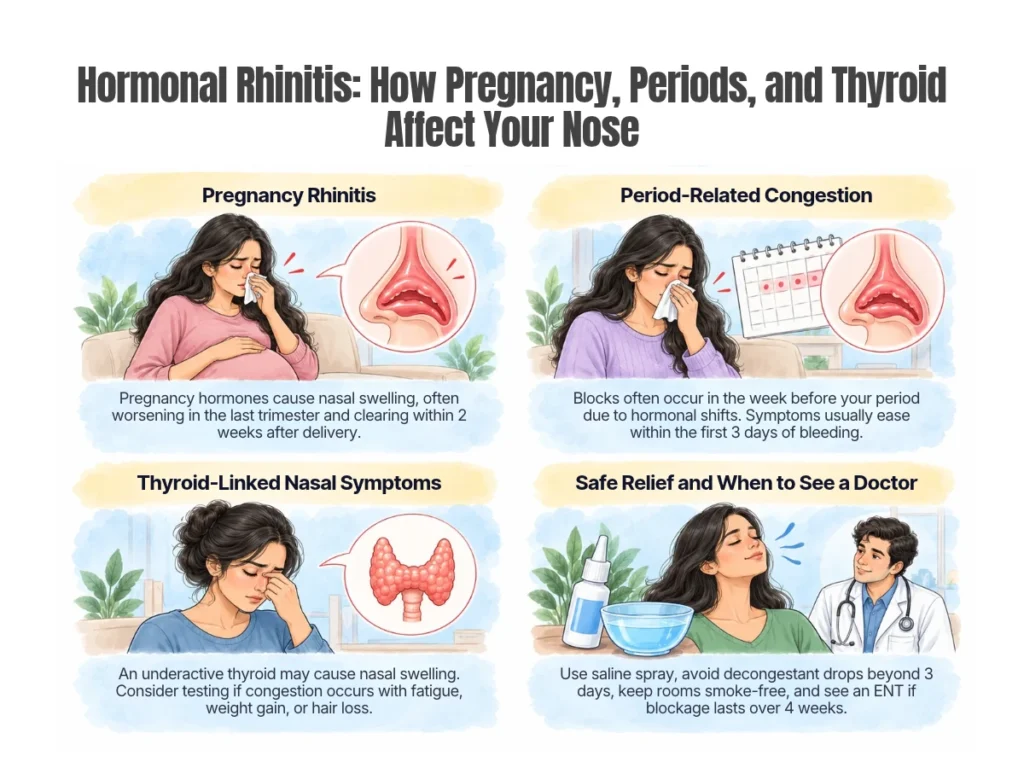
Pregnancy rhinitis is nose blockage that appears during pregnancy without any infection or allergy. It lasts 6 weeks or more and clears within 2 weeks after delivery. It often worsens in the last trimester. About 1 in 5 pregnant women experience it.
Safety matters more than speed in pregnancy. Saline spray is safe in all trimesters. Use 2 sprays in each nostril, 3 to 4 times a day. Do not use oxymetazoline nasal drops for more than 3 days, because the nose swells back worse once the drops wear off. Avoid decongestant tablets in the first 3 months of pregnancy.
At night, raise your head with 2 pillows. Ask your gynaecologist and ENT doctor together before you start any steroid nasal spray. Some sprays have more safety data than others, and your doctors can choose the right one. Heavy new snoring with swollen feet or severe headache needs a blood pressure check on the same day.
Cycle-Related Congestion and Thyroid-Linked Nasal Symptoms
Some women notice blockage in the week before their period. Hormone levels shift during this time, and the nasal lining swells. Symptoms usually ease within the first 3 days of bleeding. Mark your blocked days on a calendar for 2 to 3 months to confirm the pattern. Studies show nasal airflow changes across the cycle, but these studies are small and their results differ.
Thyroid problems can also affect the nose. Hypothyroidism, which is an underactive thyroid gland, can make tissues hold extra fluid, including the nasal lining. Evidence for a direct link is limited and comes mostly from small studies. Ask your doctor for a thyroid blood test if blockage comes with tiredness, weight gain, hair fall, constipation, or a hoarse voice.
Safe Management of Hormonal Rhinitis at Every Life Stage
Start with simple steps that suit every stage. Rinse your nose with ready-made saline 2 times a day. Sleep 8 to 9 hours with your head raised. Walk for 30 minutes daily, because gentle exercise shrinks nasal swelling for a short time. Keep your bedroom free from agarbatti and dhoop smoke, and wipe damp walls during monsoon.
During flare-ups, avoid green chillies, garam masala, pepper, biryani, spicy curries, chutneys, and pickles. Eat khichdi, curd rice, soft chapati, and plain dal without tadka. Ask a family member to help with cooking so you can rest in the afternoon for 2 hours.
Hormone levels change again at menopause, and the nose changes with them. How ENT needs change with age deserves its own attention, especially for women over 50. Visit your doctor immediately if you notice bright red nosebleeds, a fever above 39°C (102°F), or severe headache. Also visit if blockage lasts more than 4 weeks.
Conclusion
Hormonal rhinitis is common, harmless in most cases, and manageable with safe steps. Pregnancy rhinitis clears after delivery, and cycle-related blockage follows your calendar. Persistent blockage deserves a proper nasal examination and a thyroid check. Do not suffer through months of congestion in silence. Book an appointment with Dr. GVK Chaitanya Rao for a clear diagnosis and a safe plan. Bring a family member along if you wish to discuss treatment together. For a deeper understanding of sinus health, read The Sinus Book on Amazon.
FAQs
Can I use nasal drops while pregnant?
Use saline drops freely, but avoid medicated decongestant drops beyond 3 days. These drops cause rebound swelling, which means the blockage returns worse. Ask your gynaecologist before you use any other nasal product.
When should I see an ENT specialist?
See an ENT doctor if blockage lasts more than 4 weeks or disturbs your sleep. In Telangana, look for the best ENT specialist in Hyderabad who examines your nose with an endoscope, which is a thin camera. Bring a family member to the visit.
Will my medical insurance cover nasal endoscopy?
Your policy decides this. Many health insurance plans cover hospital admission but not outpatient tests, unless you have an OPD benefit. Ask your insurer or TPA before the visit, and keep all bills for a reimbursement claim.