
Have you noticed your child constantly breathing with their mouth open, especially while they sleep? This habit, often called mouth breathing, may seem harmless at first. Perhaps their teacher has mentioned they seem unusually tired or lack concentration in class. While many parents might dismiss these signs as just a quirky habit or a lingering cold, they are often the red flags of a very common, yet frequently overlooked childhood issue: enlarged adenoids.
What Are Adenoids?
You can think of adenoids as nature’s security guards. They are small, spongy patches of tissue located high up in the nasopharynx, the area right behind the nose where it meets the throat. Because of their hidden location, you cannot see them simply by looking into your child’s nose or mouth.
Their primary job is to monitor the air your child breathes, trapping unwanted intruders like harmful bacteria and viruses to trigger the body’s immune response. Adenoids are most active and largest in children between the ages of 3 and 7. As your child’s immune system matures and learns to protect the body on its own, the adenoids naturally begin to shrink, practically disappearing by adulthood.
Red Flag Symptoms for Parents to Watch For
Because adenoids trap germs, the tissue can temporarily swell up as it fights off infections or reacts to allergies. When they become too large, they block the child’s airway, leading to several noticeable symptoms.
Parents should look out for the following red flags:
- Mouth breathing: This is often the most obvious sign, leading to dry lips and a dry mouth.
- Loud snoring or noisy breathing: Sometimes described as heavy or “Darth Vader” breathing.
- Nasal voice: Your child may sound as if they are talking with their nostrils pinched.
- Frequent ear infections: Enlarged adenoids can block the Eustachian tubes, leading to fluid buildup and recurrent middle ear infections.
- Poor school performance and fatigue: Enlarged adenoids can cause sleep apnea, where a child stops breathing for a few seconds during sleep. This disturbed sleep often results in daytime fatigue, behavioral changes, and a drop in academic performance.
Treatment Options for Enlarged Adenoids
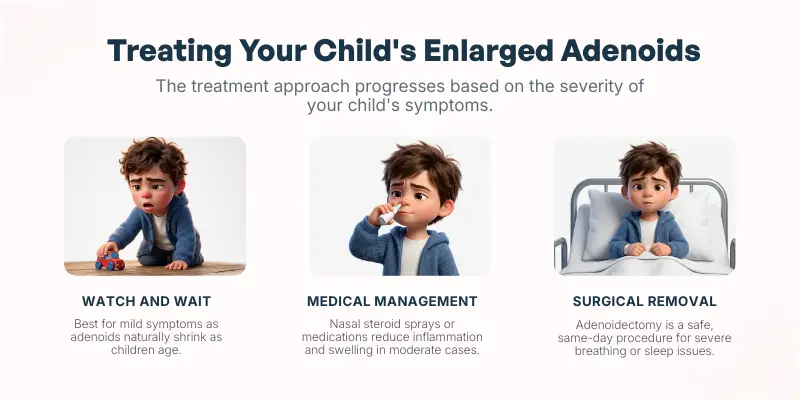
If you suspect your child has enlarged adenoids, an Ear, Nose, and Throat (ENT) specialist can help. Treatment typically follows a step-by-step approach based on the severity of the symptoms:
- Watch and Wait: Because adenoids naturally shrink as children age, doctors may suggest simply monitoring the situation if the symptoms are mild and not severely impacting the child’s sleep or daily life.
- Medical Management: For moderate cases, your doctor might prescribe nasal steroid sprays to help ease the swelling and reduce inflammation. If there is an underlying bacterial infection or allergy, antibiotics or anti-allergic medications may also be recommended.
Surgical Removal (Adenoidectomy): If medications do not provide relief, and your child is experiencing severe breathing difficulties, chronic sleep disruptions, or frequent ear infections, surgical removal may be necessary. An adenoidectomy is a very common, safe procedure performed under general anesthesia through the child’s open mouth, leaving no visible scars. Most children go home the same day and recover within a few days to a week.
Take Action for Your Child's Health
If mouth breathing, snoring, or chronic fatigue is affecting your child’s quality of life, do not wait for the problem to resolve on its own. Proper diagnosis and timely treatment can make a world of difference in their sleep, growth, and academic success.
For expert care and a patient-first approach, consult Dr. GVK Chaitanya Rao, India’s first Sinus Super Specialist and the Managing Director of Dr. Rao’s ENT Super Speciality International Hospital. You can schedule an appointment online to get a comprehensive evaluation.
To learn more about your child’s nasal health and how to navigate common sinus issues, read The Sinus Book, authored by Dr. GVK Chaitanya Rao. It is a complete, easy-to-understand guide available now on Amazon.
FAQs
What causes mouth breathing in children?
Mouth breathing in children is often caused by blocked nasal passages. One of the most common reasons is enlarged adenoids, which can obstruct airflow through the nose and force the child to breathe through the mouth.
How can I tell if my child has enlarged adenoids?
Common signs of enlarged adenoids include persistent mouth breathing, loud snoring, nasal-sounding speech, frequent ear infections, and difficulty sleeping. Some children may also appear tired or have trouble concentrating at school.
Is mouth breathing harmful for my child?
Yes, long-term mouth breathing can affect a child’s sleep quality, facial development, and overall health. Poor sleep caused by airway blockage may also lead to fatigue, behavioral changes, and learning difficulties.
How are enlarged adenoids diagnosed?
Doctors usually diagnose enlarged adenoids through a physical examination and by reviewing the child’s symptoms. In some cases, an ENT specialist may use a small nasal endoscope or imaging tests to clearly view the adenoids.
What treatments are available for enlarged adenoids?
Treatment depends on the severity of symptoms. Mild cases may improve with medications such as nasal sprays or allergy treatments. If symptoms like severe mouth breathing, sleep apnea, or repeated infections continue, doctors may recommend an adenoidectomy (surgical removal of the adenoids).
What is the recovery time after adenoid surgery?
Recovery after an adenoidectomy is usually quick. Most children return home the same day and recover within 3 to 7 days, with noticeable improvement in breathing, sleep quality, and reduced mouth breathing.