
Working from home can make sinus symptoms harder to ignore. You may start with a blocked nose, spend hours in an air-conditioned room and finish with facial pressure or sneezing. Sinus problems working from home may be linked to indoor air, dust, low humidity and daily habits during a typical workday. I’m Dr. GVK Chaitanya Rao, and I often advise patients to consider the environment where they spend most of their day.
The WFH triad: continuous AC, closed rooms, poor ventilation
Air conditioning is not automatically harmful to your nose. The concern is prolonged exposure to cold, dry air and poorly maintained systems. Cold air may affect nasal moisture and the movement of tiny hairs that help clear mucus.
A home office can remain closed for many hours. Closed rooms can limit air movement and allow indoor particles to remain longer.
In Hyderabad and other Indian cities, people often move between outdoor heat and indoor cooling. That change can make symptoms more noticeable. Regular AC filter cleaning and sensible ventilation can reduce avoidable exposure. Read more about air conditioning and sinus problems when planning your workspace.
Dust mites and the home office desk
Your desk may look clean while still collecting dust. Fabric chairs, curtains, carpets, cushions and stored papers can hold dust and allergens. Dust mites are microscopic organisms found in household dust. Their particles can trigger symptoms in people with allergic rhinitis.
The home office matters when you sit there for hours. Dusty desks, old files and fabric chairs can increase exposure close to your face.
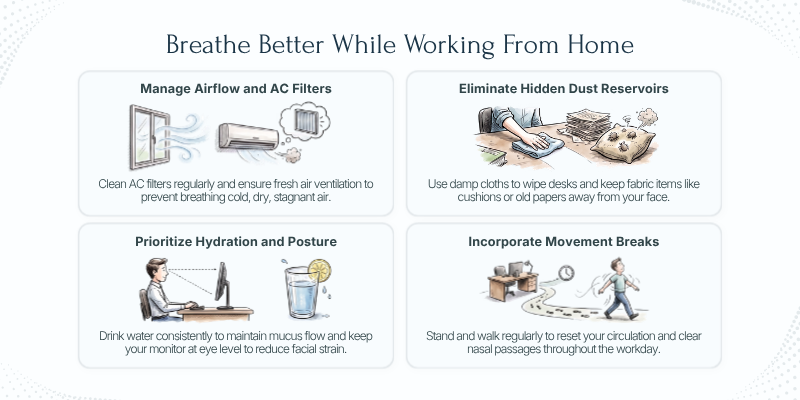
Cleaning should reduce dust rather than move it around. Wipe surfaces with a damp cloth. Wash fabrics regularly. Vacuum carpets and upholstery with a suitable filter. Keep paper piles and fabric items away from your desk.
If symptoms include sneezing, itching, watery discharge or congestion, allergies may contribute. For practical guidance, see managing nasal allergies in Indian cities.
Hydration, breaks, and posture: overlooked sinus factors
Long work sessions can change more than productivity. Screen work can lead to less water, fewer breaks and long periods in one position. These habits do not directly cause sinusitis, but they can make you feel worse when nasal symptoms are present.
Hydration supports normal mucus consistency. Keep water nearby and drink regularly through the workday. Avoid forcing excessive amounts.
Screen posture also matters for comfort. Keep the monitor at or slightly below eye level and avoid bending your neck toward a laptop for long periods. Take regular short breaks. Stand, walk around and reset your position.
If congestion affects sleep, daytime fatigue can follow. Persistent blockage deserves attention.
Setting up a sinus friendly workspace
Start with the air. Keep your AC filter clean and avoid directing cold air straight at your face. If the room feels excessively dry, consider whether controlled humidification is appropriate. Avoid excessive humidity because damp spaces can support mold growth.
Next, reduce dust sources. Keep the desk uncluttered, clean surfaces regularly and wash curtains or other fabrics that collect dust. During high pollution, keep windows closed and use effective indoor filtration.
Your routine matters too. Keep water at your desk, take movement breaks and maintain a comfortable screen position. If symptoms are linked to a particular room, compare what changes when you work elsewhere. This may help identify triggers.
The goal is to reduce avoidable irritants while maintaining comfortable airflow and humidity.
Conclusion
Sinus problems working from home can be influenced by the environment and routines surrounding your workday. AC exposure, dust, poor ventilation, dehydration and prolonged screen time can affect comfort when allergies or nasal inflammation are present.
Small changes can make your workspace easier on your nose. Clean the AC filter, reduce dust, manage humidity, improve ventilation and take regular breaks. If congestion, facial pressure, discharge or breathing difficulty persists, seek an ENT assessment rather than assuming your workspace is the only cause.
For persistent symptoms, discuss your pattern with Dr. Chaitanya Rao through the appointment page.
FAQs
Can working from home cause sinusitis?
Working from home does not automatically cause sinusitis. Indoor allergens and irritating air can worsen nasal symptoms in susceptible people.
Should I use an air purifier in my home office?
An air purifier may help reduce airborne particles in some indoor environments. Use depends on pollutants, room size and filter type. It should complement cleaning and ventilation.
When should I consult an ENT specialist?
Consider consulting the best sinus specialist in Hyderabad if nasal blockage keeps returning, affects sleep or work, or occurs with facial pain, persistent discharge or breathing difficulty. Recurrent symptoms may need assessment for allergies, structural problems or other causes.