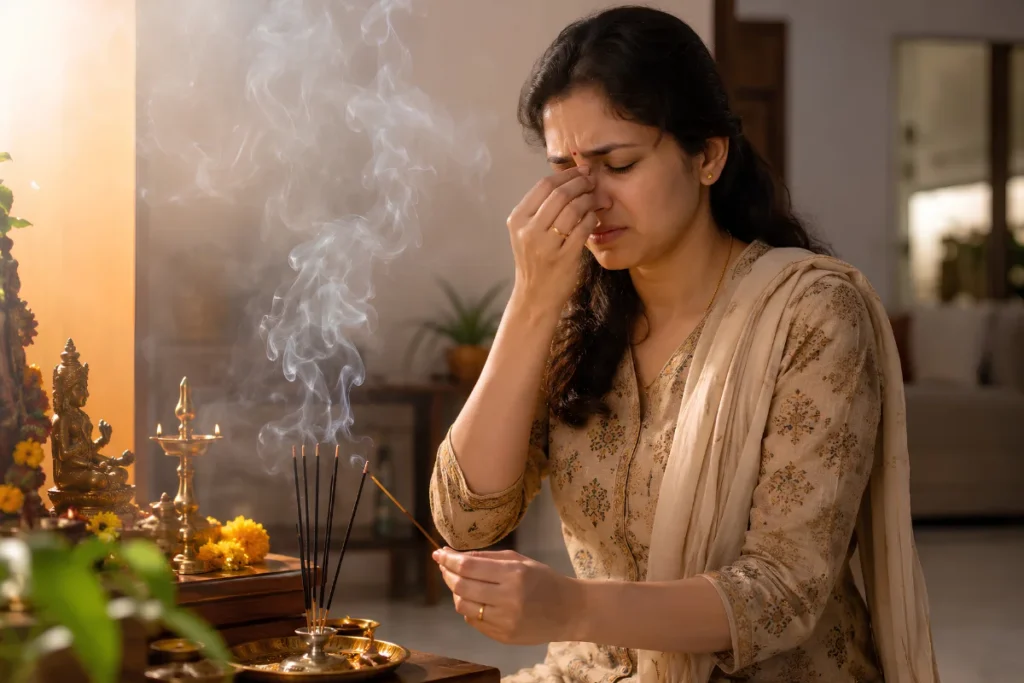
Dr. GVK Chaitanya Rao often hears a simple question from people who develop sneezing, congestion or a runny nose after lighting agarbatti or dhoop: “Why does something that smells pleasant make my nose feel worse?” If you notice incense smoke and sinus irritation happening together, you are not necessarily imagining the connection. Smoke and strong fragrances can irritate the nasal lining even when there is no allergy involved. The goal is not always to stop a cultural or religious practice. It is to understand your trigger and reduce unnecessary exposure.
What incense smoke contains and how it compares to other pollutants
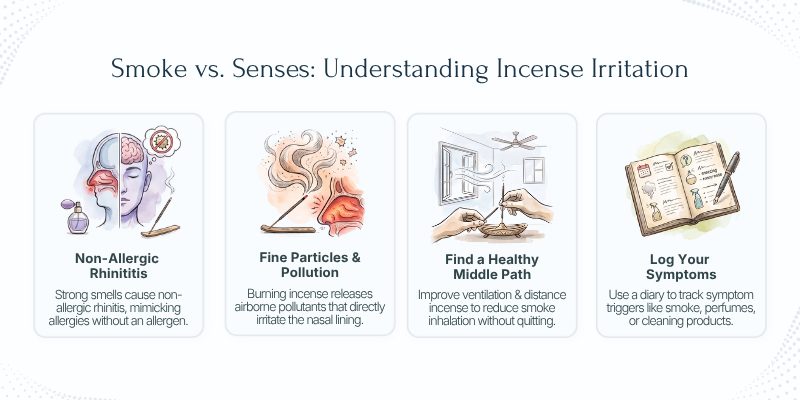
Incense does more than release fragrance. Burning agarbatti, dhoop or other incense produces smoke containing particulate matter and gases. Fine particles can remain suspended in indoor air and enter the respiratory system. Combustion can also release substances such as carbon monoxide and volatile organic compounds. Incense burning is recognised as one source of indoor air pollution.
This does not mean every exposure causes disease. The amount of exposure depends on factors such as the type of incense, how long it burns, room size and ventilation. A small room with closed windows can allow smoke to accumulate more than a well-ventilated space.
The nose is the first part of the airway to meet these particles and chemicals. For some people, this can cause burning, sneezing, congestion or increased nasal discharge. Similar symptoms can occur with traffic pollution, tobacco smoke, cleaning fumes and other airborne irritants. Understanding the wider relationship between “pollution and chronic sinusitis” can help put incense exposure into perspective.
Incense smoke and sinus irritation: why some noses react to smells, not allergens
Not every reaction to incense is an allergy. Non-allergic rhinitis is a condition where the nose reacts to triggers without the typical allergic mechanism. Strong smells, smoke, pollution and chemical fumes can trigger symptoms in some people.
The symptoms can look similar to allergic rhinitis. You may experience sneezing, a blocked nose, watery discharge or a feeling of nasal irritation. However, allergy testing may not identify an allergen responsible for these episodes.
This distinction matters because avoiding every possible allergen may not solve the problem. Instead, the focus may need to shift towards identifying specific irritants. You can read more about “allergic vs non-allergic rhinitis” to understand how these conditions differ.
I advise patients to notice whether symptoms appear consistently after exposure to incense, perfumes, smoke or cleaning products. If they do, reducing exposure can be a useful part of managing symptoms.
Balancing tradition and health: practical middle paths
For many Indian families, lighting incense is connected to prayer, festivals and daily routines. Telling someone to stop without considering that context is not always practical.
A middle path is to reduce the amount of smoke reaching your breathing zone. Burn less incense, avoid placing it beside where you sit and improve ventilation where possible. Keep doors or windows positioned to allow smoke to leave the room rather than remain trapped indoors.
If incense consistently triggers symptoms, consider reducing how often it is burned or choosing practices that do not involve combustion. Some fragrance products may still release irritants, so “smoke-free” does not automatically mean symptom-free.
If you have persistent nasal symptoms, I would not assume incense is the only cause. Allergic rhinitis, chronic rhinosinusitis, nasal polyps and other conditions can produce overlapping symptoms. The right approach depends on the pattern and duration of your symptoms.
Identifying your triggers with a symptom diary
A symptom diary can help turn a vague suspicion into a useful pattern. The Sinus Book also recommends keeping track of symptoms and the situations in which they occur.
Record when symptoms begin, what you were exposed to and how long the symptoms last. Note whether incense, perfume, cooking smoke, dust, air conditioning or outdoor pollution was present. Also record whether symptoms occur at home, at work or in another environment.
The aim is not to prove that one product caused every episode. It is to identify repeated associations. This information can also help an ENT specialist decide whether further evaluation is needed.
Conclusion
Incense smoke and sinus irritation can occur together because smoke and strong odours may irritate a sensitive nasal lining. This does not necessarily mean you have an allergy or that you must give up an important tradition.
Start by observing your pattern, reducing unnecessary smoke exposure and improving ventilation. If congestion, discharge, sneezing or facial symptoms continue despite these changes, it is worth looking for other causes.
If you need help understanding persistent nose or sinus symptoms, you can “book an appointment with Dr. Chaitanya Rao” for an appropriate evaluation.
FAQs
Can incense cause sinusitis?
Incense smoke can irritate the nose and airways, but irritation alone does not mean you have sinusitis. Persistent symptoms need assessment for causes such as allergies, infection, structural problems or chronic rhinosinusitis.
Should I stop using incense if it makes me sneeze?
If sneezing reliably follows exposure, reducing or avoiding that exposure is reasonable. Better ventilation and shorter exposure may also help. If symptoms continue without incense exposure, another trigger or underlying nasal condition may be involved.
When should I see a specialist for symptoms triggered by incense?
Consider an ENT evaluation if symptoms are frequent, persistent, interfere with sleep or daily activities or occur with facial pain, reduced smell or repeated sinus infections. If you are looking for a “best sinus specialist in Hyderabad“, the consultation should focus on identifying the cause rather than treating every reaction as an allergy.