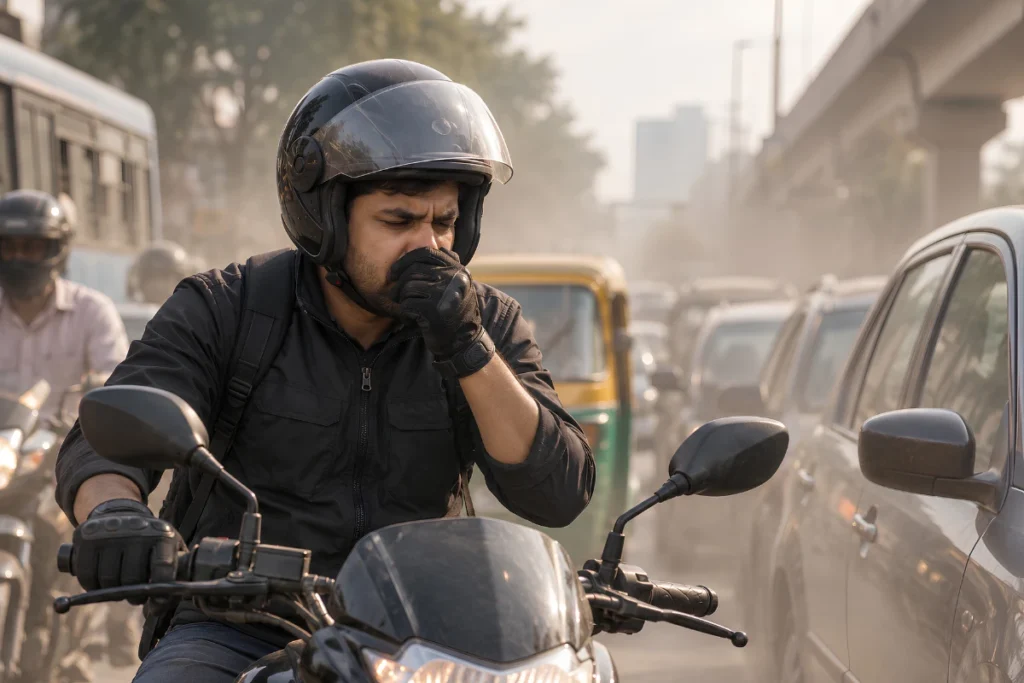
If your nose feels blocked, irritated or dry after every bike ride, you may start wondering why the problem keeps returning. For many people, daily commuting through Indian traffic means repeated exposure to dust, vehicle exhaust, road debris and strong airflow. These exposures can contribute to sinus problems for bike riders, especially when the nose is already sensitive because of allergies or inflammation.
As Dr. GVK Chaitanya Rao, I often advise patients to look at their daily environment when nasal symptoms keep recurring. Your commute may not be the only cause, but reducing avoidable exposure can help protect your nasal lining and reduce irritation.
1. What a daily two-wheeler commute does to the nasal lining
The inside of your nose is covered by a thin lining that warms, humidifies and filters the air you breathe. Tiny hairs and mucus help trap particles before they travel deeper into the respiratory system.
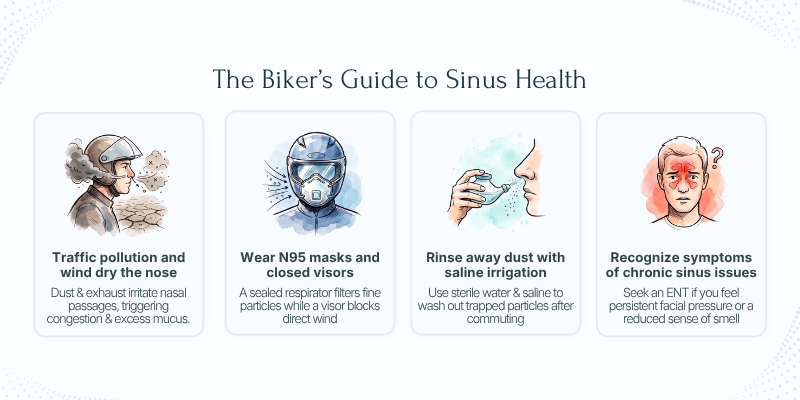
A two-wheeler commute can challenge this system in several ways. Road dust contains particles from soil, construction activity, tyre wear and other sources. Traffic also exposes riders to particulate pollution and exhaust. When these particles enter the nose repeatedly, they can irritate the nasal lining.
Wind adds another factor. At higher speeds, continuous airflow can increase the feeling of nasal dryness, particularly when the air is already dry. A dry or irritated nose may feel congested, produce more mucus or become uncomfortable during and after a ride.
Pollution does not automatically mean that someone will develop sinusitis. However, repeated exposure can aggravate existing nasal inflammation and make symptoms harder to control. This is particularly relevant for people with allergic rhinitis, a deviated nasal septum or other conditions that already affect nasal airflow.
For a broader explanation of the relationship between pollution and sinus symptoms, read how city air harms your sinuses.
2. Helmet, mask, and visor choices that actually protect
A helmet is essential for road safety, but the helmet itself is not designed to filter polluted air. Its vents may allow air to circulate around the head and face.
A visor can reduce direct exposure to wind and larger airborne particles. A properly closed visor may also make the ride more comfortable. However, a visor should not be considered a substitute for respiratory protection against fine particles.
The mask you wear underneath the helmet matters more when air pollution is a concern. A well-fitting particulate respirator, such as an N95 that meets an appropriate certification standard, can reduce exposure to airborne particles. The benefit depends heavily on fit. Air that enters through gaps around the nose or cheeks bypasses the filter.
Cloth masks and loose coverings generally provide less predictable protection against fine particulate pollution. If you use a respirator, it should cover both the nose and mouth and fit closely without interfering with safe helmet use.
Masks designed to filter particles do not remove gases and vapours from vehicle exhaust. They therefore reduce one part of the exposure rather than eliminating all traffic-related pollution.
3. The post-commute nasal rinse routine
After a long commute, some riders notice dust or mucus accumulating in the nose. A saline nasal rinse can help wash away mucus and trapped particles while adding moisture to the nasal passages.
I recommend discussing regular nasal irrigation with an ENT specialist if you have recurring symptoms. The technique and frequency should suit your condition. It should not become a substitute for diagnosing an underlying problem.
If you use a squeeze bottle, neti pot or another irrigation device, water safety is important. The FDA recommends using distilled or sterile water, or tap water that has been boiled and cooled. The device should also be cleaned properly after use. Tap water should not be used directly for nasal irrigation because it can contain organisms that are unsafe inside the nasal passages.
You can learn more about saline irrigation for sinusitis and when it may be appropriate.
A simple routine can also include washing your face after a dusty ride and changing out of visibly dusty clothing. These steps do not treat sinusitis, but they can reduce the amount of environmental material that remains around the nose and face.
4. Signs your commute is driving chronic sinus disease
Not every blocked nose after a bike ride means chronic sinusitis. The important question is whether symptoms continue even when you are away from traffic.
Persistent nasal blockage, reduced sense of smell, facial pressure, thick nasal discharge or mucus draining into the throat can indicate an ongoing nasal or sinus problem. Repeated symptoms over several months deserve assessment rather than repeated self-treatment.
The pattern can provide useful information. If symptoms become worse on commuting days and improve during periods away from traffic, environmental exposure may be contributing. However, that pattern alone cannot establish the cause.
I also look for underlying factors such as allergies, a deviated nasal septum, swollen tissues inside the nose or nasal polyps. Treating these conditions may be necessary when environmental changes alone do not provide enough relief.
If symptoms persist for around 12 weeks or keep returning despite appropriate treatment, an ENT assessment can help determine whether chronic rhinosinusitis or another nasal condition is present. The right treatment depends on the underlying cause.
Conclusion
For people who commute by two-wheeler every day, avoiding traffic exposure completely may not be practical. But sinus problems for bike riders should not simply be accepted as part of commuting.
A properly fitted particulate respirator, a suitable visor, attention to commuting conditions and appropriate saline irrigation can reduce some forms of nasal irritation. Persistent symptoms still need evaluation because pollution may aggravate an underlying nasal or sinus condition rather than being the only cause.
If your symptoms keep returning after your daily commute, consider getting an ENT evaluation to identify what is driving them. You can book an appointment with Dr. Chaitanya Rao for an assessment.
FAQs
Can riding a bike every day cause sinusitis?
Bike riding itself does not automatically cause sinusitis. However, repeated exposure to dust and particulate pollution can irritate the nose and may worsen existing nasal inflammation. If symptoms persist or recur frequently, an underlying condition should be assessed.
Should I wear an N95 mask while riding a bike?
A properly fitted N95 can reduce exposure to airborne particles. It does not filter gases and vapours from vehicle exhaust. The respirator should fit securely over the nose and mouth and should not interfere with safe riding or helmet use. People with certain heart or lung conditions should discuss respirator use with their doctor.
When should a bike rider see an ENT specialist?
Persistent congestion, reduced smell, facial pressure, recurring discharge or symptoms lasting for weeks despite reasonable measures are reasons to seek medical advice. If you are unsure whether your symptoms are caused by pollution, allergies or another nasal problem, consulting a qualified specialist can help. Someone looking for a best sinus specialist in Hyderabad should focus on relevant ENT experience, proper diagnosis and an evidence-based treatment plan.