
You have been tossing and turning for the third night in a row, your nose feels blocked, and by morning there is that familiar heaviness behind your eyes. Many patients tell me they only notice the pattern later: the sinus trouble arrives after weeks of late nights, exam stress or night shifts. The research on sleep deprivation and sinus infections is still growing, but the broad picture is clear. Too little sleep weakens the body’s defences, and the nose often pays the price first.
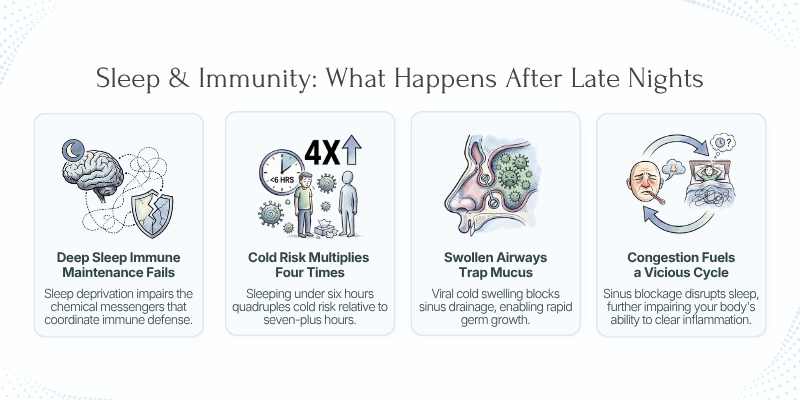
Sleep and immunity: what happens to your defences after late nights
Sleep is when the immune system does much of its maintenance work. During deep sleep, the body regulates the chemical messengers that coordinate the fight against viruses and bacteria, and people who sleep less tend to show weaker immune responses (Besedovsky et al., 2012). In a well-known study of healthy adults deliberately exposed to a cold virus, those sleeping under six hours a night were over four times more likely to catch a cold than those sleeping more than seven hours (Prather et al., 2015).
This matters for your sinuses because most acute sinus infections begin as an ordinary viral cold. The swollen nasal lining blocks the tiny drainage openings of the sinuses, and trapped mucus becomes a place where germs multiply. The nose also relies on mucus and hair-like structures called cilia to sweep out dust, pollen and microbes, a heavy workload in Hyderabad’s dusty, polluted air. It is worth being honest here: direct evidence that short sleep damages this cleaning system in humans is limited, and many studies are small, so this part of the link is plausible rather than proven.
The vicious cycle of sleep deprivation and sinus infections
The relationship runs in both directions. Sinus disease disrupts sleep through blocked airways, post-nasal drip (mucus dripping down the back of the throat) and night-time coughing, and reviews of patients with chronic sinusitis report poorer sleep quality and more daytime tiredness (Alt and Smith, 2013). A tired body then clears infection and inflammation less efficiently, and the next night is worse again.
I’ve written about how screens, irregular schedules and stress feed this loop in his article on modern lifestyle and sinus health, which is a useful read if your routine runs late into the night.
Sleep hygiene tailored for congested noses
In clinic, I suggest small, realistic changes rather than a complete overhaul. Keep a fixed bedtime and wake time, even on weekends. A saline rinse in the evening can thin mucus and ease breathing, and guidelines support saline irrigation for chronic sinusitis (Fokkens et al., 2020). Use only boiled and cooled or distilled water, never plain tap water.
Many of my patients also find that an extra pillow helps drainage, and that a cool, dust-free bedroom makes a real difference, so wash bedsheets weekly in hot water and keep air conditioner filters clean. Try to avoid heavy late dinners and phone screens in bed. Finally, please do not rely on decongestant nasal sprays night after night, because using them beyond a few days can cause rebound congestion that worsens the blockage.
When to suspect sleep apnea alongside sinus disease
Sometimes a blocked nose is not the whole story. Nasal obstruction is a recognised risk factor for sleep-disordered breathing (Young et al., 1997), and sleep apnea, where breathing repeatedly pauses during sleep, can sit alongside sinus disease. You can read more about sleep apnea and sinus trouble in a companion article.
If you snore loudly, wake up gasping, have a dry mouth or morning headaches, or feel exhausted after a full night in bed, I would want to look beyond the sinuses. Family members often notice the pauses in breathing before the patient does. Clearing the nose does not always cure apnea, so a proper sleep assessment matters.
Conclusion
The key takeaway is simple: protecting your sleep is part of protecting your sinuses, and treating the nose is part of protecting your sleep. Breaking the cycle of sleep deprivation and sinus infections usually needs both. If your symptoms keep returning, book an appointment with Dr. GVK Chaitanya Rao for a thorough assessment.
For a deeper, patient-friendly guide to your sinuses, read The Sinus Book on Amazon.
FAQs
Can a single bad night of sleep cause a sinus infection?
Unlikely on its own. The evidence points to repeated short sleep over days or weeks raising your chances of catching colds, which can then progress to a sinus infection.
How much sleep do I need to support my immune system?
Most adults need seven or more hours a night (Watson et al., 2015), and the cold study above found the lowest risk in people sleeping more than seven hours.
When should I see a specialist instead of managing at home?
If congestion, facial pressure or discharge lasts beyond ten days, keeps returning, or comes with loud snoring and daytime exhaustion, it is time for expert care. Choosing the best sinus doctor in Hyderabad means finding someone who listens patiently, examines your nose properly and also asks about your sleep.