
Your face feels heavy after a set of squats. Your forehead throbs halfway through a morning run. Many people blame the workout, but the sinuses are often the real reason. Sinus pressure during exercise is common, and it usually has a clear explanation. This guide explains why it happens, which training is safe, and when to pause. Dr. GVK Chaitanya Rao sees this complaint often in his clinic.
Why Sinus Pressure During Exercise Builds Up
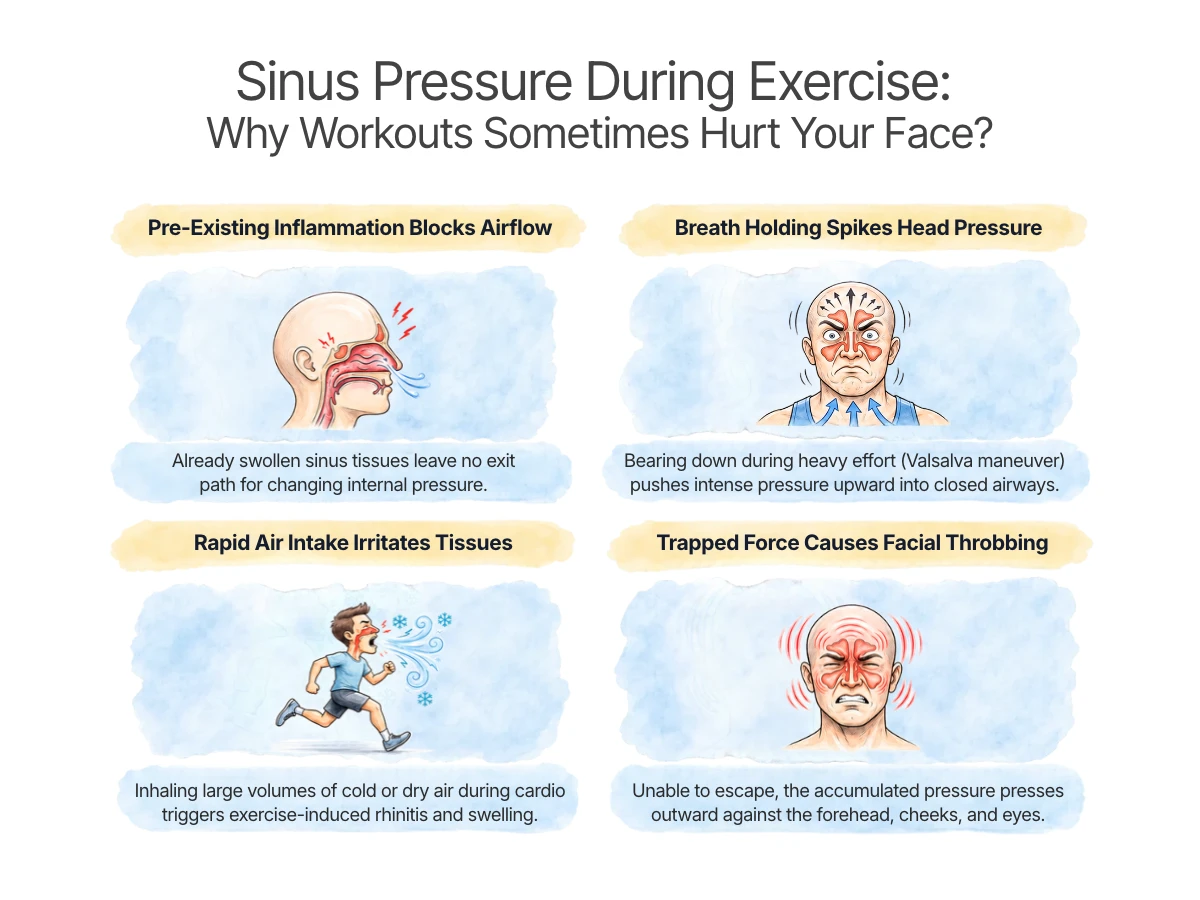
Sinus pressure during exercise often starts with how you breathe. Breath holding raises pressure in the chest and head. Doctors call this the Valsalva maneuver, which is a forceful push against a closed airway. If your sinuses are already swollen, that extra pressure has nowhere easy to go.
Heavy lifting invites this strain. Many lifters hold their breath and bear down on the hardest part of each rep. Evidence linking this directly to sinus symptoms is limited, so these points rest mainly on physiology and clinical experience.
In my practice, I ask patients to breathe out during the effort phase of a lift. Keep your neck relaxed and avoid straining through the face. Small changes like these reduce pressure on an already blocked sinus.
Exercise-Induced Rhinitis: The Runner's Runny Nose
Running pulls large volumes of air through the nose quickly. Cold, dry air can irritate the lining and trigger a watery drip. Specialists call this exercise-induced rhinitis, and it differs from an infection. The drip is usually clear and stops soon after the workout ends.
Thick yellow or green mucus that lasts for days points toward a sinus infection instead. Facial pain, fever, or a reduced sense of smell also suggest a deeper problem. Those signs need a clinical review, not just a change in your run.
Warm up for 10 minutes before running in cold weather. Breathe through your nose at a comfortable pace where possible. In Indian cities with winter fog or construction dust, a light scarf over the mouth can help.
Training Around a Sinus Flare: What Is Safe and What to Skip
A mild cold with a blocked nose usually allows light activity. Walk at a steady pace for 20 to 30 minutes each day. Gentle yoga and stretching also suit most people during a flare. Many sports medicine clinicians follow an above-the-neck rule: mild symptoms allow light training, while fever or chest symptoms mean rest. Evidence for this rule comes mostly from expert opinion, so judge your own body carefully.
Skip heavy deadlifts, sprint intervals, and competitive matches during an active flare. Those efforts raise breath holding and head pressure the most. Athletes who train at a higher level can read more about sinusitis in athletes before their next season.
Stop exercising and seek medical care if you notice a fever above 39°C (102°F), a severe headache, swelling around the eyes, or bright red nosebleeds. Those signs can point to complications that need urgent review.
Post-Surgery Exercise Timelines by Procedure
Return-to-training timelines depend on the procedure and the surgeon’s approach. Balloon sinuplasty is the least invasive option, and many patients resume light walking within a few days. Endoscopic sinus surgery, septoplasty, and nasal polypectomy usually need a longer pause before heavy training.
During days 1 to 3, avoid bending, lifting, and straining. During weeks 1 to 2, walk daily but skip running and gym weights. After week 2, ask your surgeon before resuming heavy training, since individual healing varies. You can read the full recovery timelines for sinus surgeries on our sister site.
Conclusion
Sinus pressure during exercise usually comes from breath holding, cold air, or an active sinus problem. Adjust your breathing, warm up well, and scale back workouts during a flare. Sudden or severe symptoms need medical review without delay. If facial pressure keeps stopping your training, book a consultation with Dr. GVK Chaitanya Rao. For a plain-language guide to sinus care, The Sinus Book is available on Amazon and Flipkart.
FAQs
Is my headache after lifting sinus-related?
It can be, because straining raises pressure inside the head. Headaches that come with facial pressure, a blocked nose, or colored mucus point toward the sinuses. A clinical check helps confirm the cause.
Can I run with a mild cold?
Usually yes, at an easy pace, if you have no fever or chest symptoms. Stop running if you feel dizzy or have trouble breathing.
Should I see an ENT for exercise-related sinus pressure?
Yes, if facial pressure lasts more than 10 days or keeps stopping your workouts. Choose a doctor with sinus surgery training, such as the best ENT specialist in Hyderabad for a detailed assessment.