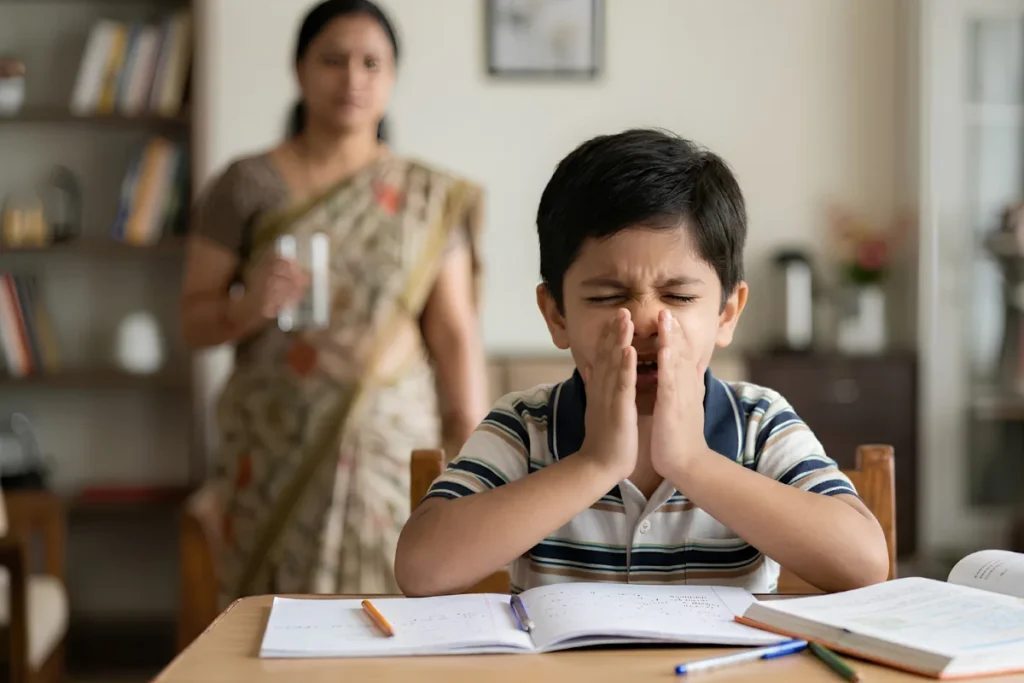
Your child has missed four school days this month. When they’re home, they’re irritable, complaining of a stuffy nose, and trailing behind on math homework because they can’t concentrate. You’ve assumed it’s just another cold, but weeks pass and nothing improves. What many parents don’t realize is that persistent nasal congestion and daytime sleepiness in children often point to sinusitis in school children, a condition that goes unrecognized far more often than it should.
Unlike the dramatic sinus infections adults experience, sinusitis in children masquerades as chronic colds, allergies, or behavioral problems. The impact on school attendance, academic performance, and sleep quality can be silent and cumulative. Understanding what’s really happening inside your child’s sinuses, and how to respond, changes everything.
Why Children's Sinusitis Looks Different from Adult Disease
Sinusitis in children presents completely differently than in adults, and that’s the first reason parents miss it. A school-aged child rarely complains of sharp facial pain or dramatic pressure headaches the way an adult does. Instead, a child with sinusitis reports a stuffy nose that never quite clears, often accompanied by a persistent cough (especially at night), bad breath, or a postnasal drip they may not even have words to describe.
The anatomy matters here. Children’s sinuses are still developing, their nasal passages are narrower, and the infection often stays confined in ways that produce few obvious symptoms. Many children with sinus involvement don’t have facial pain at all. What they have is fatigue, mouth breathing in children, and an irritability that parents sometimes misattribute to personality or screen time overuse.
The cold-like symptoms (runny or stuffy nose, cough) persist beyond the typical 7-10 day window of a viral illness. When those symptoms stretch past two weeks, or when a child has repeated “colds” that overlap throughout the school year, sinusitis in children is worth investigating rather than dismissing.
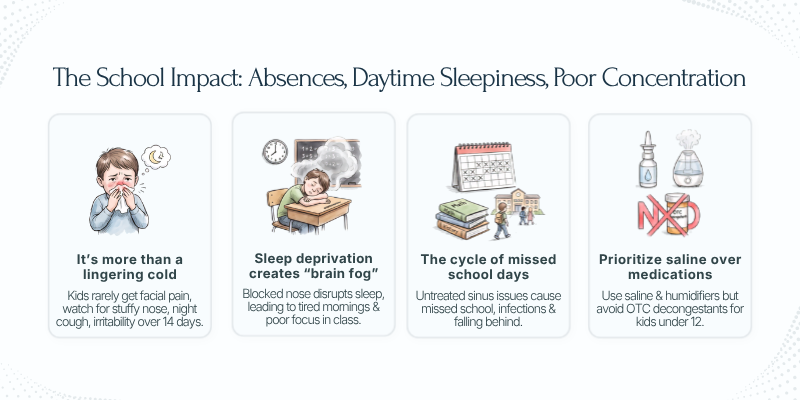
The School Impact: Absences, Daytime Sleepiness, Poor Concentration
The real cost of sinusitis in school children shows up in the attendance register and the report card. Here’s why: poor sleep from nasal obstruction means a child wakes unrefreshed, even if they’ve been in bed eight hours. During the day, they’re fighting a constant fog of fatigue. They struggle to focus during lessons, finish assignments slowly, and become frustrated more easily.
Some children develop secondary ear problems because sinus inflammation blocks the drainage pathway from the middle ear, leading to ear discomfort and further sleep disruption. Others develop sleep-related breathing problems, which amplifies the daytime sleepiness and attention deficit.
The infection itself, though not severe enough to keep them bedridden, makes them feel unwell. A stuffy nose makes eating and drinking uncomfortable. They mouth breathe, which dries out their throat and worsens cough. Parents also report that children with untreated sinusitis in children tend to catch secondary bacterial infections more frequently because their sinus drainage is impaired, creating a cycle of repeated absences and repeated courses of antibiotics.
Home Care That Works and Mistakes to Avoid
First-line management begins at home, and getting it right can prevent unnecessary antibiotic courses. I recommend saline nasal irrigations, which flush the nasal passages and reduce inflammation gently and without medication. A neti pot designed for children or a saline spray works well. Use plain isotonic saline (not hypertonic versions) and perform the irrigation once or twice daily, particularly before bedtime to improve sleep quality.
Humidity matters. Run a humidifier in your child’s bedroom at night to keep the air moist and reduce nasal inflammation. Avoid dry heating and ensure your child drinks adequate water throughout the day.
The mistake parents often make is treating sinusitis in children as they would a cold. Over-the-counter decongestants should not be used in young children (under 12) without medical guidance because they can cause rebound congestion. Another common error is assuming that antibiotics will solve it. Most uncomplicated sinusitis in children is viral, not bacterial, and antibiotics provide no benefit in those cases.
When a Pediatric ENT Evaluation Is Due
Bring your child to a pediatric ENT specialist if symptoms persist beyond three weeks, if recurrent sinus infections occur (more than three episodes per year), or if you notice behavioral changes, poor school performance that correlates with nasal symptoms, or signs of obstructed sleep (snoring, witnessed breath holds, restless sleep).
During evaluation, I use nasal endoscopy to visualize the sinuses directly and confirm the diagnosis. A scan is rarely needed unless complications are suspected. Once we understand what’s driving the sinusitis in school children, we can offer targeted treatment, which might include prescription nasal irrigation, topical corticosteroids, or allergy testing if allergies are a contributing factor. For children with recurrent episodes, understanding the underlying causes of chronic sinusitis in children is crucial to preventing a cycle of infections and missed school days.
Early identification and proper management of sinusitis in school children prevent cascading academic and behavioral consequences. Most children improve dramatically once the underlying sinus inflammation is addressed.
FAQs
Can sinusitis in school children resolve on its own?
Yes, many cases of viral sinusitis improve within 2-3 weeks with supportive care like saline irrigation, humidification, and adequate hydration. However, if symptoms persist beyond three weeks or occur repeatedly, professional evaluation is important to prevent complications and to address underlying triggers like allergies or adenoid enlargement. Untreated chronic sinusitis in school children can worsen sleep and school performance unnecessarily.
Does my child need imaging like a CT scan for sinusitis diagnosis?
In most cases, no. Diagnosis is clinical, confirmed by symptom history and direct visualization through nasal endoscopy. CT scans are reserved for recurrent or complicated infections, or when surgery is being considered. Routine imaging is unnecessary and exposes children to radiation without changing management in straightforward cases.
When should I consult a sinus specialist for my child's symptoms?
If your child has three or more sinus infections in a year, or if symptoms interfere with school attendance and sleep for longer than three weeks despite home care, a consultation with a best sinus specialist in India experienced in pediatric care is worthwhile. A specialist can determine whether allergies, adenoid enlargement, or other factors are driving the problem and can offer targeted solutions tailored to your child’s age and needs.
Ready to get answers? If your child’s symptoms are affecting school attendance or sleep, schedule an appointment for a proper evaluation. For a comprehensive guide to childhood sinus health, pick up The Sinus Book on Amazon or Flipkart.